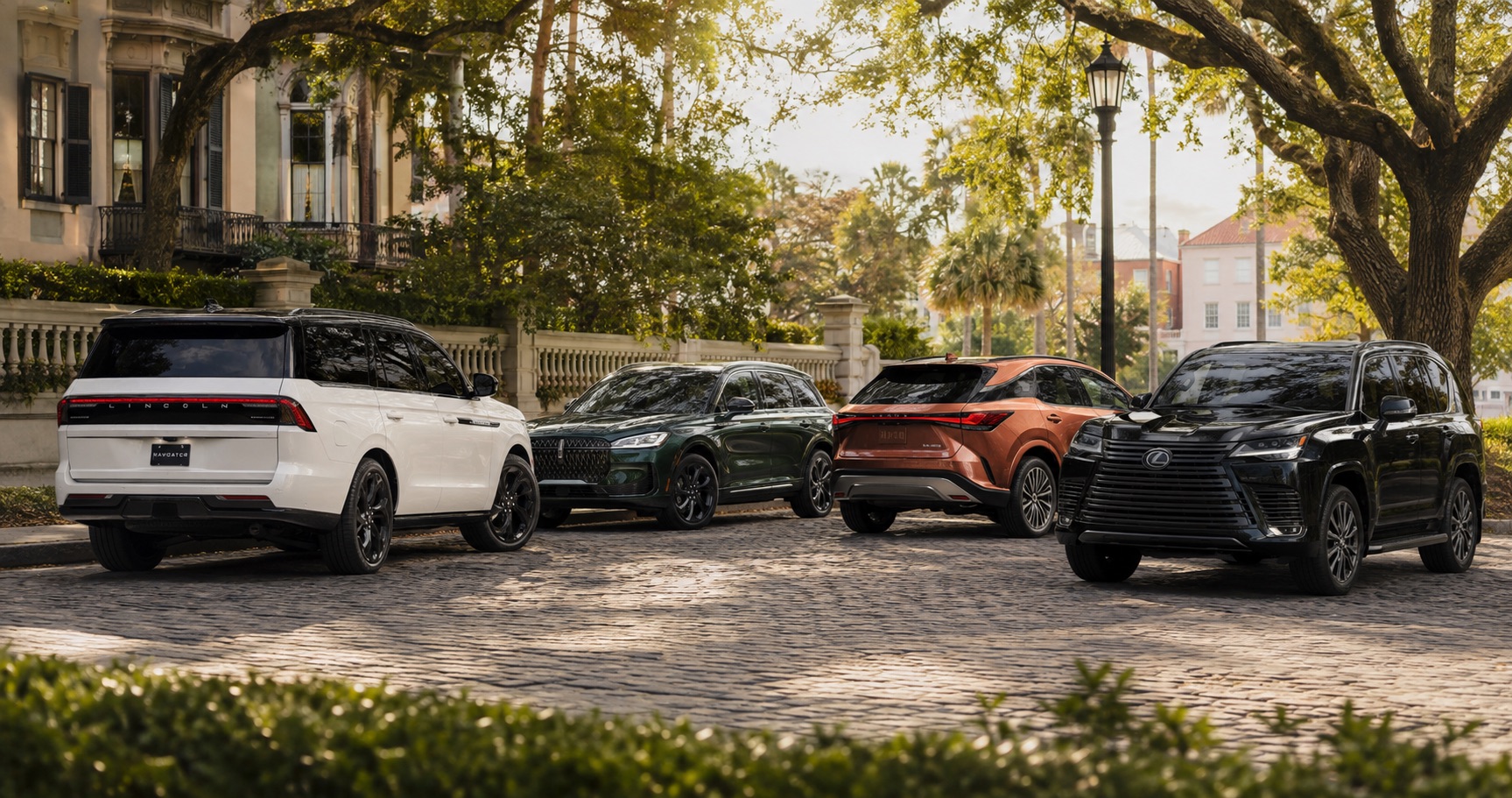
A Luxury Brand Comparison for Coastal Georgia
Lincoln vs Lexus: Which Luxury Brand Fits You?
A Focused SUV Sanctuary or a Broader, More Electrified Luxury Portfolio?
The Better Fit Depends on the Experience You Want.
Lincoln and Lexus both make sense for shoppers who want luxury without defaulting to the same European brands, but they now approach that mission from noticeably different directions. Both put refinement, quietness, technology, and customer care near the center of the experience; what changes is how broadly each brand interprets those ideas.
Lincoln currently concentrates on four luxury SUVs, creating a straightforward path from Corsair through Navigator. Lexus uses a broader portfolio with more body styles, powertrain strategies, and specialty roles. That makes this comparison less about forcing one universal model matchup and more about deciding whether you prefer a focused SUV experience or a more expansive luxury ecosystem.
For drivers around Savannah, the Lowcountry, and the coastal I-95 corridor, the useful question is what you want the brand to keep delivering as your needs change. This guide compares lineup structure, luxury character, powertrain strategy, technology, value, warranty coverage, and ownership support, using individual models as evidence without turning the page into a stack of model-vs-model comparisons.
Buyer-Fit Shortcuts
Start With the Luxury Priority That Matters Most to You
Choose the experience closest to your priorities. Each result suggests a brand to investigate first while preserving the strongest reason the other brand may still belong on your list.
Your Best Starting Point
Quiet, Sanctuary-First SUV Luxury
Start With Lincoln
Why It Fits
Lincoln currently concentrates its entire U.S. lineup on SUVs and repeatedly builds the experience around quietness, seating comfort, relaxation technology, and low-friction highway travel. Nautilus and Navigator make that philosophy especially visible through panoramic digital environments and available Lincoln Rejuvenate.
Also Compare
Lexus can be equally refined, but it spreads its luxury identity across more personalities—from the quiet UX, NX, RX, and TX to F SPORT, GX/LX Overtrail, sedans, a grand-tourer, and battery-electric models.
Your Best Starting Point
More Body Styles + Model Choice
Start With Lexus
Why It Fits
Lexus gives shoppers more ways to stay within one luxury brand. Its current U.S. portfolio reaches beyond crossovers and SUVs into passenger cars and grand touring, while also creating dedicated off-road and battery-electric choices alongside hybrid and plug-in-hybrid models.
Also Compare
Lincoln's smaller lineup can be easier to navigate if you already know you want an SUV: Corsair, Nautilus, Aviator, and Navigator create a clear small-to-full-size ladder — fewer overlapping branches can make the lineup easier to understand.
Your Best Starting Point
Broader Hybrid, Plug-In + EV Choice
Start With Lexus
Why It Fits
Electrification is distributed across much more of the Lexus lineup. UX is hybrid-only, NX and RX offer hybrid and plug-in-hybrid paths, TX adds hybrid and plug-in three-row choices, LX now has a hybrid, and RZ supplies a dedicated battery-electric SUV route.
Also Compare
Lincoln is not purely gas-powered. The 2026 Corsair Grand Touring provides a plug-in-hybrid path, Nautilus offers a conventional hybrid, and the 2027 Corsair moves to a full-hybrid format. The difference is breadth: Lexus gives electrification more roles across the portfolio.
Your Best Starting Point
Panoramic Tech + Highway Hands-Free Convenience
Start With Lincoln
Why It Fits
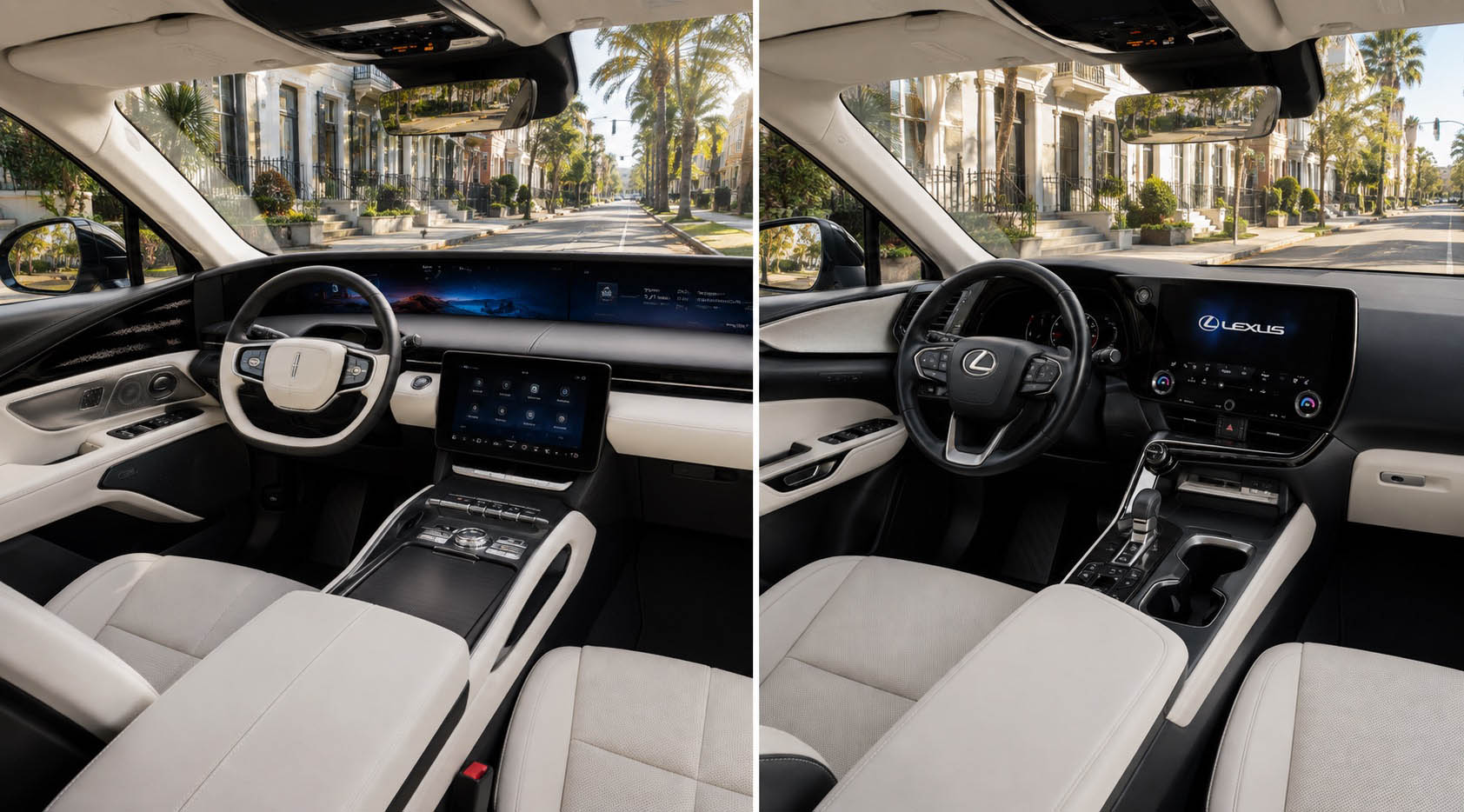
Newer Lincoln SUVs place digital information across a broad visual field, with a 48-inch panoramic display in Nautilus and Navigator, while BlueCruise is integrated broadly across the current SUV family. The result is a consistent brand emphasis on reducing effort during long highway drives.
Also Compare
Lexus counters with Lexus Interface, Digital Key, available Advanced Park on select models, and Lexus Safety System+ 3.0 across much of the 2026 lineup. Its technology presentation is generally more model-specific than Lincoln’s panoramic-screen signature.
Your Best Starting Point
Performance + Off-Road Personality
Start With Lexus
Why It Fits
Lexus creates more explicit specialty branches. F SPORT reaches across several model lines, RX 500h and RZ 550e push electrified performance, and GX/LX Overtrail models make serious off-road capability part of the luxury portfolio.
Also Compare
Lincoln still has substantial capability—the Aviator uses a 400-hp twin-turbo V6 and Navigator brings full-size towing strength—but those vehicles are presented primarily through effortless power, comfort, and confidence rather than a separate performance or trail identity.
Your Best Starting Point
Pickup & Delivery + Black Label Ownership
Start With Lincoln
Why It Fits
Lincoln makes time-saving service part of the brand proposition. Complimentary Pickup & Delivery applies to eligible new Lincolns within the 4-year/50,000-mile new-vehicle warranty, while Black Label adds four years/50,000 miles of Premium Maintenance plus additional personalized benefits.
Also Compare
Lexus has a strong hospitality story of its own through LexusCare, including the first two scheduled maintenance visits plus roadside and retailer-based ownership support. Its approach puts more emphasis on included early maintenance and dealership hospitality than on a single upper-tier ownership program.
Lincoln vs Lexus in 60 SecondsSix answers that clarify the brand-level decision
Which brand has the broader current vehicle portfolio?
Lexus. Lincoln’s current U.S. lineup is a focused four-nameplate SUV family—Corsair, Nautilus, Aviator, and Navigator—while Lexus covers passenger cars plus seven SUV/crossover nameplates and multiple electrified body styles.
Which Lincoln and Lexus SUVs overlap most directly?
Nautilus and RX are the cleanest two-row midsize pairing, Aviator and TX overlap as three-row luxury SUVs, and Navigator and LX occupy flagship territory. Corsair can cross-shop with UX or NX depending on footprint, powertrain, and budget priorities.
Which brand offers more electrified pathways?
Lexus. Its 2026 range includes conventional hybrids, plug-in hybrids, and battery-electric vehicles across multiple model families. Lincoln offers meaningful electrified choices—including the 2026 Corsair plug-in hybrid, Nautilus Hybrid, and 2027 Corsair Hybrid—but across a smaller set of roles.
Which brand leans harder into a relaxation-first luxury experience?
Lincoln. Its current product language and hardware repeatedly emphasize comfort, quietness, Perfect Position seating, Rejuvenate, panoramic digital presentation, BlueCruise, and ownership convenience. Lexus combines serenity with a broader performance, driver-engagement, and off-road spectrum.
Which brand offers more dedicated performance and off-road choices?
Lexus. F SPORT appears across multiple model lines, while GX and LX Overtrail make trail-oriented luxury a defined part of the portfolio. Lincoln still offers substantial power and towing capability, but it frames those strengths more around effortless confidence than separate performance or off-road sub-families.
Do Lincoln and Lexus differ much on basic warranty length?
Not at the headline level. Both publish 4-year/50,000-mile basic and 6-year/70,000-mile powertrain coverage. Their ownership packages separate more through LexusCare maintenance, electrified-component coverage, Lincoln Pickup & Delivery, and Black Label benefits.
Lincoln vs Lexus by Brand Decision Point
Six Ways the Two Luxury Brands Define the Experience Differently
Use the categories below to isolate one brand-level difference at a time. Individual models appear as supporting examples rather than as stand-ins for the entire brand.
At a Glance
Lincoln Is the More Focused Luxury Brand;
Lexus Gives Shoppers More Ways to Define Luxury
The most important difference is not one feature or one vehicle. It is how much breadth each brand builds around its core luxury philosophy.
What the Brand-Level Difference Means
Lincoln's current lineup creates a narrower, more straightforward shopping path: four SUVs cover progressively larger roles while repeating comfort, digital calm, BlueCruise, and ownership convenience. Lexus offers more branches, and those branches create real choices Lincoln does not currently mirror — cars, a coupe/convertible, dedicated BEVs, F SPORT performance, and Overtrail off-road luxury.
Lineup & Model Roles
The Core SUV Matchups Are Easy to See;
the Gaps Around Them Matter Just as Much
Use these relationships as cross-shopping anchors, not forced equivalents. Several Lexus models overlap one Lincoln depending on size, powertrain, or capability priorities.
Lineup Takeaway
If you know you want an SUV, Lincoln’s hierarchy is easier to decode: Corsair, Nautilus, Aviator, Navigator. Lexus becomes more compelling when the brand itself needs to accommodate different vehicle types or specialty use cases over time—especially hybrid-first commuting, plug-in driving, EV ownership, performance styling, or off-road-oriented luxury.
Luxury Philosophy & Cabin
Lincoln Builds Around Sanctuary and Ease;
Lexus Blends Omotenashi With a Wider Driving Personality
Both can deliver quiet, richly finished cabins. The distinction is how consistently each brand repeats one experience versus how many interpretations it supports.
Luxury Experience Takeaway
Lincoln is the cleaner fit when “luxury” means reducing effort: a quiet cabin, relaxation-oriented seating, broad information displays, and services designed around your time. Lexus is the stronger fit when luxury needs to stretch from serenity to more driver engagement, performance styling, off-road credibility, or traditional sedan/grand-touring forms without leaving the brand.
Powertrains, Performance & Capability
Lincoln Electrifies Select SUV Roles;
Lexus Uses Electrification to Multiply the Number of Roles
This is one of the clearest lineup asymmetries. Lincoln’s current strategy is focused; Lexus’s is explicitly multi-pathway.
Powertrain & Capability Takeaway
Lexus has the broader answer if you want to choose the propulsion strategy first and the vehicle second: hybrid, plug-in hybrid, and BEV options appear across multiple classes. Lincoln’s advantage is simplicity for SUV shoppers who want comfort first and then choose how much efficiency, power, or size they need. The 2026 Corsair PHEV also matters—it prevents the Lincoln story from being reduced to “gas or conventional hybrid only.”
Technology & Driver Assistance
Lincoln Creates a More Visible Digital Signature;
Lexus Spreads Advanced Tech Across More Vehicle Types
The question is less “which brand has technology?” than where that technology is emphasized and how consistently the experience carries from one model to the next.
Technology Takeaway
Lincoln’s newest cabins make technology part of the luxury atmosphere itself: panoramic displays reduce visual clutter and BlueCruise directly targets long highway travel. Lexus is less visually uniform across the lineup but offers a mature safety/infotainment ecosystem plus strong parking and digital-access features on select models. Neither is a simple technology-count winner.
Value, Warranty & Ownership
The Core Warranty Is a Tie;
Included Service Benefits Create Different Ownership Value
Value is broader than entry price. Warranty structure, electrified-component coverage, included maintenance, service convenience, and longer-term cost context all shape the ownership proposition.
What the Ownership Evidence Means
The headline basic and powertrain warranties do not separate the brands. Lexus adds longer hybrid-battery coverage and includes the first two scheduled maintenance visits on new vehicles. Lincoln counters with complimentary Pickup & Delivery eligibility across the new-vehicle warranty window, four years/50,000 miles of Premium Maintenance on eligible Black Label vehicles, and a #2 Consumer Reports maintenance-and-repair-cost rank versus #15 for Lexus. That ranking is directional rather than a claim about a specific dollar gap.
Independent Brand Context
Consumer Reports Ranks the Brands One Place Apart Overall—
With Different Ownership-Cost Signals
The same 2026 Consumer Reports brand framework gives useful context because it evaluates both manufacturers on one methodology. Lexus holds a one-place edge overall and within luxury brands, while the maintenance-and-repair-cost ranking points in Lincoln’s favor.
Consumer Reports
2026 Overall & Ownership-Cost Rankings
Lincoln
Lincoln lands inside the top 10 overall, with a particularly strong maintenance-and-repair-cost ranking.
Consumer Reports places Lincoln #7 overall and #4 among luxury brands, one position behind Lexus in each measure. Lincoln’s #2 Maintenance and Repair Cost rank is one of its strongest brand-level ownership results, although an ordinal rank should not be read as a specific dollar-savings estimate for any individual vehicle.
Consumer Reports
2026 Overall & Ownership-Cost Rankings
Lexus
Lexus holds the narrow overall and luxury-brand lead in the same Consumer Reports framework.
Consumer Reports places Lexus #6 overall and #3 among luxury brands. Its #15 Maintenance and Repair Cost rank trails Lincoln’s current result, but the one-place overall lead reinforces why this page should treat the brands as close competitors rather than turn one outside ranking into a universal verdict.
Explore the Lincoln Lineup in Person
See Which Lincoln SUV Fits the Luxury Experience You Want
A brand comparison can narrow the philosophy, but the useful next step is sitting in the Lincoln sizes that match your life. Compare the more maneuverable Corsair, two-row Nautilus, three-row Aviator, and full-size Navigator against the passenger space, technology, comfort, and budget you actually need.
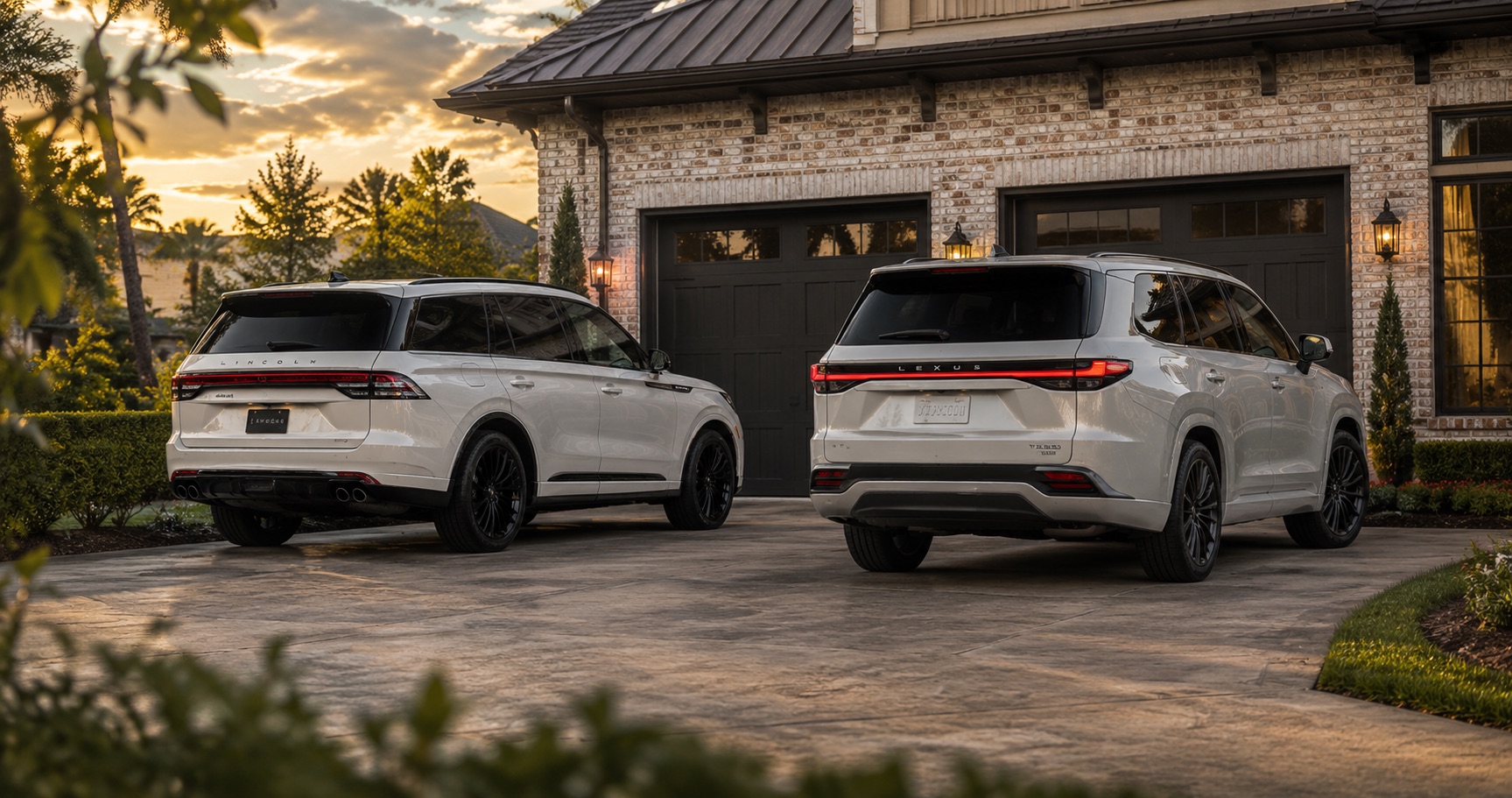
Where the Brand Decision Actually Lands
Focused SUV Luxury or Broader Luxury Choice?
That Is the Real Lincoln-vs-Lexus Split
Lincoln makes the stronger case when you already know your next luxury vehicle will be an SUV and you want the brand to repeat the same core priorities as the vehicles get larger: calm road manners, comfort-first cabins, panoramic technology in key models, BlueCruise highway assistance, and service conveniences designed around your time. Black Label takes that consistency further by turning premium materials and ownership support into one recognizable upper tier.
Lexus becomes more attractive when staying with one brand should preserve more future choices. It can move from an efficient UX or NX to RX, TX, GX, LX, sedans, grand touring, dedicated battery-electric models, F SPORT, or Overtrail without asking you to leave the badge. That broader range is a genuine advantage when your next luxury vehicle may need to serve a very different role from the one you are shopping for today.
The tie-breaker is not which brand can produce the longer feature list. It is whether you value a more unified definition of SUV luxury or a broader definition of what a luxury vehicle can be. Once that is clear, model-level comparisons become much easier because you know which compromises are actually worth investigating.
See Which Brand Best Fits Your Priorities in the Quiz Below
Treat the quiz as a research shortcut only. Brand direction can narrow the field, but the final choice should still account for the exact model, powertrain, equipment, price, service terms, and test-drive experience you are considering.
Lincoln vs Lexus FAQ
The J.C. Lewis Lincoln Experience
A Lincoln Experience Designed Around Your Time—
Before and After the Sale
J.C. Lewis Lincoln Savannah brings more than 108 years of J.C. Lewis automotive experience to Lincoln shoppers across Coastal Georgia and the nearby South Carolina Lowcountry. That long local history is paired with a Lincoln-focused luxury experience built around transparent communication, personal guidance, and the flexibility to handle more of the buying process on your terms.
Vehicle selection, trade valuation, financing, paperwork, and delivery can be coordinated through one dealership team instead of becoming separate errands. Qualifying new-Lincoln buyers can also take advantage of home delivery throughout the Southeast, giving customers from Pooler and Richmond Hill to Hilton Head and Beaufort more flexibility in how much time they spend at the dealership.
That convenience continues after the sale through factory-trained Lincoln technicians, online service scheduling, qualifying Lincoln Pickup & Delivery, and mobile service for select needs. For owners balancing Savannah commutes, I-95 travel, and weekends throughout the Lowcountry, those services can make maintaining a luxury vehicle easier to work around real life—and give J.C. Lewis Lincoln a role in the ownership experience long after the purchase is complete.
Where to Go Next
Start Shopping or Keep Researching
Move from the brand decision to the next useful step: shop the Lincoln SUV size that fits, put your trade and financing in view, or go deeper into model sizing, Black Label, ownership, and model-specific research.
Start Shopping
Choose the Lincoln SUV Size That Fits Your Life
Go directly to current model inventory, then put trade value and financing against the Lincoln that matches your passenger, cargo, and luxury priorities.
Keep Researching
Go Deeper Into the Lincoln Lineup & Ownership Experience
Use model-size guidance, Black Label information, ownership planning, and specific Lincoln comparisons to turn the brand-level fit into a real shortlist.
Disclaimers:
*Current Lincoln and Lexus lineup information was checked September 2, 2026. Both brands are moving through 2026/2027 model-year transitions, so model years, trim structures, powertrains, availability, pricing, and feature packaging can change. Verify the exact vehicle before purchase.
*Brand-level pricing is not presented as a direct dollar-gap verdict because the manufacturers use different published price treatments and the lowest-priced vehicles are not exact equivalents. The 2026 Lincoln Corsair reference is $39,985 starting MSRP; the 2026 Lexus UX 300h reference is $38,850 including Delivery, Processing and Handling. Taxes, title, registration, dealer fees, options, incentives, and transaction adjustments are additional as applicable.
*Electrification examples reflect current/announced U.S. model-year information. The 2026 Corsair Grand Touring is a plug-in hybrid with an EPA-estimated 27-mile electric range, Nautilus offers a conventional hybrid, and the 2027 Corsair shifts to a full-hybrid format. Lexus electrified offerings vary by model and include conventional hybrid, plug-in hybrid, and battery-electric paths. Actual fuel economy, MPGe, charging time, and electric range vary with equipment, charging, driving, weather, load, maintenance, and other conditions.
*Performance, towing, off-road equipment, seating, materials, displays, driver-assistance features, parking technology, connected services, and comfort features vary by model, trim, powertrain, package, activation, retailer, and subscription. Never exceed vehicle, hitch, axle, tire, payload, tongue-weight, or trailer ratings.
*BlueCruise, Lexus Traffic Jam Assist, Lexus Safety System+, Lincoln Co-Pilot360, parking systems, and related technologies are driver-assistance features, not autonomous-driving systems. Operation depends on model, road, speed, traffic, activation, compatible-device, trial/subscription, and driver-monitoring conditions. The driver remains responsible for the vehicle at all times.
*Both brands publish 4-year/50,000-mile basic and 6-year/70,000-mile powertrain warranty terms. Hybrid/electric coverage, LexusCare, Lincoln Pickup & Delivery, Lincoln Black Label Premium Maintenance, roadside assistance, loaner/wash benefits, connected services, and other programs are subject to eligibility, exclusions, retailer participation, time/mileage limits, activation, and program changes. Review the applicable warranty and program documents for the exact vehicle.
*Consumer Reports overall, luxury-brand, and maintenance-and-repair-cost rankings cited here were checked September 2, 2026. These are brand-level directional signals and do not quantify the exact ownership cost of any individual vehicle. External Consumer Reports links are provided for independent perspective; J.C. Lewis Lincoln does not control third-party content.