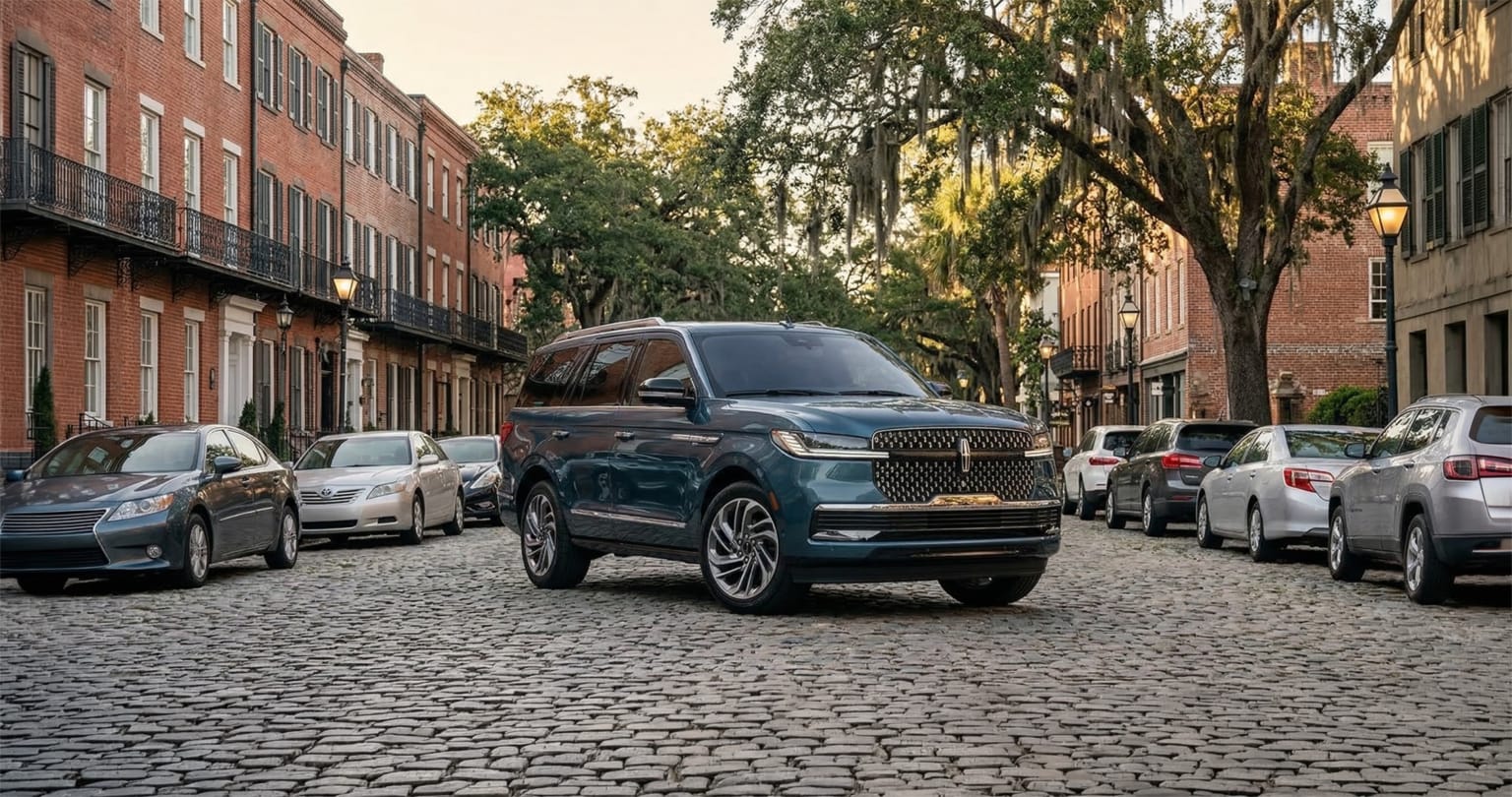
If you’re researching Lincoln Navigator specs, it’s important to look beyond just the numbers and understand how this full-size luxury SUV fits into real-world driving. From performance and towing capability to interior space and cargo flexibility, each spec tells part of the story of what it’s like to live with a Navigator every day.

In this guide, we break down the most important Lincoln Navigator specifications, including engine performance, fuel efficiency, exterior and interior dimensions, and cargo space. You’ll also see how the standard Navigator compares to the extended Navigator L, helping you decide which model better aligns with your needs—whether that’s maximizing passenger comfort or gaining extra storage for trips and daily use.

For drivers in Savannah, Bluffton, and Beaufort, the Navigator offers a versatile mix of power, space, and refinement that works just as well for daily commutes as it does for long-distance travel or hauling gear.

Quick Answers:

What is the seating capacity of the Lincoln Navigator?
The Lincoln Navigator seating capacity reaches up to eight passengers depending on configuration.

What engine does the Lincoln Navigator use?
It features a twin-turbocharged 3.5L V6 engine producing 440 horsepower and 510 lb-ft of torque.

What are the key Lincoln Navigator dimensions?
The Navigator L is longer than the standard model, offering more cargo space while maintaining similar passenger room.

How much cargo space does the Navigator offer?
The Navigator L provides up to 121.6 cubic feet of cargo space with the seats folded.

2026 Lincoln Navigator Specs Breakdown
Powertrain Performance & Oil Maintenance
Specification Navigator 4x4 & Navigator L 4x4
Engine Size & Type Twin-Turbocharged 3.5L V6 EcoBoost Engine With Auto Start-Stop Technology
Transmission 10-Speed Automatic Transmission With SelectShift® Capability & Paddle Activation
Drivetrain 4x4
Horsepower 440 hp @ 5,850 Rpm
Torque 510 Lb-Ft @ 3,000 Rpm
Maximum Towing Capacity (Lbs.) 8,700
Oil Capacity (Qt.) 6.0
Oil Type SAE 5W-30 Motor Oil
Oil Change Interval 5,000 to 7,500 Miles or Every Six Months (Whichever Comes First)


When looking at Lincoln Navigator specs, this powertrain setup tells you a lot about how the vehicle performs in everyday driving—not just on paper. The twin-turbocharged 3.5L V6 delivers a strong 440 horsepower and 510 lb-ft of torque, which translates to confident acceleration whether you’re merging onto the highway in Savannah or hauling a full load of passengers and gear around Bluffton.

That power isn’t just for speed—it directly supports the Navigator’s impressive 8,700-pound towing capacity. For drivers in Beaufort who tow boats, trailers, or campers, that capability adds real flexibility without needing to step up to a heavy-duty truck. The standard 4x4 system also means better traction in varying conditions, from wet coastal roads to uneven terrain.

The 10-speed automatic transmission plays a key role in keeping the drive smooth and controlled. It helps balance power and efficiency by adjusting seamlessly through gears, which you’ll notice during both city driving and long-distance trips.

Maintenance-wise, the oil capacity and recommended 5,000 to 7,500-mile service interval are fairly typical for a vehicle in this class. That means predictable upkeep without overly frequent service stops. Overall, these Lincoln Navigator specifications highlight a full-size SUV that blends strong performance with practical, day-to-day usability.

Fuel Specifications
Fuel Specifications
Specification Navigator 4x4 Navigator L 4x4
EPA-Estimated MPG (City/Highway) 15/22 15/22
Fuel Tank Capacity (Gal.) 23.6 27.8
Fuel Type Premium Unleaded (Recommended) Premium Unleaded (Recommended)
Recommended Octane 91 91


Looking at Lincoln Navigator specifications for fuel efficiency, this is where you start to understand the trade-offs that come with a full-size luxury SUV. The 15 city and 22 highway MPG ratings are consistent across both the standard Navigator and the longer Navigator L, which means choosing the larger model does not impact your day-to-day fuel efficiency.

Where the difference does show up is in fuel tank size. The Navigator L’s larger 27.8-gallon tank compared to the standard model’s 23.6 gallons means fewer stops at the pump—something drivers in Savannah or Hilton Head will appreciate during longer coastal drives or weekend trips. It gives the extended model a clear advantage for road trips and highway cruising.

The requirement for premium unleaded fuel with a recommended 91 octane is important to factor into ownership costs. While it helps the engine deliver its full performance potential, it also means slightly higher fill-up costs compared to regular fuel vehicles. However, for many drivers in Bluffton, that added cost is balanced by the smoother performance and efficiency tuning of the EcoBoost engine.

Overall, these Lincoln Navigator specs highlight a vehicle designed more for capability and comfort than maximum fuel savings, while still offering practical range and consistency across both body styles.

Wheels, Tires & Brakes
Specification Navigator 4x4 Navigator L 4x4
Wheel Size 22-Inch 22-Inch
Standard Tire Size P275/50R22 All-Season BSW P275/50R22 All-Season BSW
Available Tire Size P285/40R24 All-Season BSW P285/40R24 All-Season BSW
Front Brakes Twin Piston Brakes - 13.8-Inch Vented Disc Rotors Twin Piston Brakes - 13.8-Inch Vented Disc Rotors
Rear Brakes EPB Brakes - 13.2-Inch Vented Disc Rotors EPB Brakes - 13.2-Inch Vented Disc Rotors


When reviewing Lincoln Navigator specs, the wheel and tire setup plays a bigger role in daily comfort and driving feel than many shoppers expect. Both the Navigator and Navigator L come standard with 22-inch wheels, which strike a balance between a bold, upscale appearance and a smooth ride quality. For drivers in Savannah or Beaufort, that means a vehicle that feels stable and composed on both city streets and highway stretches.

The standard all-season tires are designed for year-round usability, providing dependable traction in typical driving conditions without needing seasonal swaps. This is especially useful for coastal areas like Hilton Head, where weather can change quickly but rarely requires specialized tires.

For those looking for a more aggressive stance, the available 24-inch tire setup enhances the Navigator’s road presence. However, larger wheels can slightly firm up the ride, so it becomes a trade-off between style and comfort depending on your preference.

Braking performance is another standout in these Lincoln Navigator specifications. The large vented disc brakes—13.8 inches in the front and 13.2 inches in the rear—are designed to confidently manage the size and weight of the SUV. In real-world driving, that translates to more controlled stops, whether you're navigating traffic or coming down from highway speeds.

Exterior Dimensions
Exterior Dimensions
Specification Navigator 4x4 Navigator L 4x4
Wheelbase (In.) 122.5 131.5
Length (In.) 210 221.9
Height (In.) 78 78
Width – Excluding Mirrors (In.) 80 80
Width – Including Mirrors (In.) 94.6 94.6
Width – Mirrors Folded (In.) 84.6 84.6
Front Track (In.) 68.1 68.1
Rear Track (In.) 67.8 67.8


When reviewing Lincoln Navigator dimensions, the differences between the standard model and the extended Navigator L become especially important for everyday usability. The most noticeable change is in overall length and wheelbase, with the Navigator L stretching nearly 12 inches longer. In real-world terms, that added length translates directly to more interior space—particularly in the third row and cargo area—making it a strong choice for families or anyone regularly traveling with passengers in Savannah.

At the same time, both models share the same width and height, which helps keep the driving experience consistent. Whether you are navigating tighter parking situations in Bluffton or cruising through open roads near Beaufort, the Navigator maintains a wide, planted stance that contributes to stability and comfort behind the wheel.

The width measurements, especially with mirrors extended at 94.6 inches, are worth noting for daily driving. This can impact how easily the vehicle fits into parking spaces or garages, so drivers should be mindful in tighter areas. However, features like power-folding mirrors help make those situations more manageable.

Overall, these Lincoln Navigator specifications highlight a vehicle designed to maximize interior room without drastically changing how it feels to drive. Choosing between the standard and extended model ultimately comes down to how much space you need versus how often you are navigating tighter environments.

Interior Dimensions
Interior Dimensions
Specification Navigator 4x4 Navigator L 4x4
Head Room – First Row (In.) 38.3 38.3
Head Room – Second Row (In.) 37.9 37.9
Maximum Leg Room – First Row (In.) 43.5 43.5
Leg Room – Second Row (In.) 40.9 40.9
Hip Room – First Row (In.) 61.9 61.9
Hip Room – Second Row (In.) 61.7 61.7
Shoulder Room – First Row (In.) 65.3 65.3
Shoulder Room – Second Row (In.) 65.1 65.1


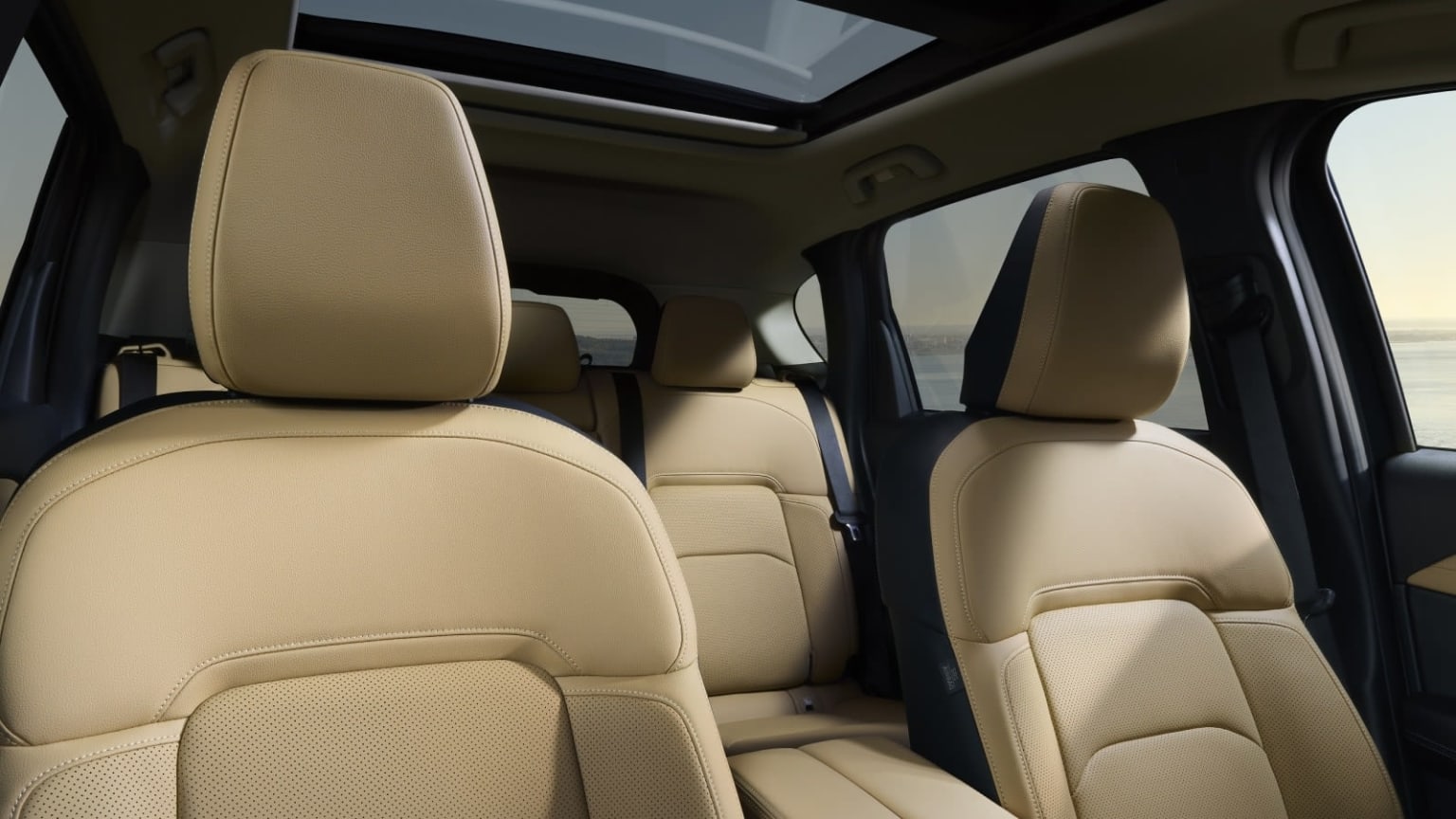
When diving into Lincoln Navigator dimensions on the inside, the focus quickly shifts from size to comfort—and this is where the Navigator really stands out. Both the standard and Navigator L models offer nearly identical interior measurements, which means choosing the longer version does not change how spacious it feels for passengers in the first two rows.

Up front, the generous 43.5 inches of legroom gives drivers and passengers plenty of space to stretch out, which makes a noticeable difference during longer drives around Savannah or daily commuting in Bluffton. The second row is just as impressive, with over 40 inches of legroom, making it comfortable for adults—not just kids—on extended trips.

Shoulder and hip room measurements further reinforce how wide and accommodating the cabin is. This added width allows passengers to sit comfortably without feeling crowded, which is especially important for families or groups traveling together in Beaufort. It also makes installing child seats or carrying multiple passengers in the second row more manageable.

Overall, these Lincoln Navigator specifications highlight a cabin designed for full-size comfort across multiple rows. While the Navigator L adds extra cargo and third-row space behind the scenes, both models deliver the same premium passenger experience where it matters most—inside the vehicle.

Cargo Space & Curb Weight
Specification Navigator 4x4 Navigator L 4x4
Passenger Volume (Cu.-Ft.) 172.1 172.1
Cargo Volume Behind First Row (Cu.-Ft.) 107 121.6
Cargo Volume Behind Second Row (Cu.-Ft.) 60.8 75.4
Cargo Volume Behind Second Row (Cu.-Ft.) (Second-Row Seat Full Forward) 69.9 84.5
Cargo Volume Behind Third Row (Cu.-Ft.) 21.6 36.1
Cargo Volume Behind Third Row (Cu.-Ft.) (Third-Row Seat Full Upright) 22.9 37.4
Fuel Capacity (Gallons) 23 27
Base Curb Weight (Lbs.) 5,824 5,939


When evaluating Lincoln Navigator specs, cargo space is one of the biggest factors that separates it from smaller SUVs—and even between its own two configurations. Both models offer the same passenger volume, which means seating comfort stays consistent. However, the Navigator L clearly pulls ahead when it comes to usable storage space.

With over 121 cubic feet of cargo room behind the first row, the Navigator L provides a noticeable advantage for families, road trips, or hauling larger items. Even behind the third row, the difference is significant. The extended model offers over 36 cubic feet compared to just over 21 cubic feet in the standard version. For drivers in Savannah or Hilton Head, that extra space can make a real difference when packing luggage, groceries, or beach gear without needing to fold seats down.

The flexible cargo configurations also stand out. Being able to slide the second row forward to gain additional space gives drivers more control over how they use the interior, whether prioritizing passengers or storage. This is especially useful for active lifestyles around Bluffton where needs can change from day to day.

Looking at Lincoln Navigator specifications overall, the added size of the Navigator L translates directly into more convenience and versatility. If cargo capacity is a priority, the extended model offers a clear, practical advantage without sacrificing passenger comfort.

How Lincoln Navigator Specs Translate to Real Life

When you look at Lincoln Navigator specs, the real value comes from how those numbers show up in your daily routine. The strong V6 engine and smooth 10-speed transmission mean the Navigator feels effortless to drive, whether you are commuting through Savannah or heading out on the highway from Bluffton. It delivers power when you need it, but in a way that stays quiet and refined, which makes a noticeable difference on longer drives.

Space is where these Lincoln Navigator specifications really stand out. Both models offer a comfortable, open cabin, but the Navigator L adds extra cargo room that can make life easier for families or anyone who travels with gear. For drivers in Beaufort, that could mean fitting luggage, groceries, or beach equipment without having to rearrange the entire interior. In the end, the specs highlight a vehicle that is built to handle real life with a balance of performance, comfort, and everyday flexibility.

FAQ: Lincoln Navigator Specs & Specifications Guide


What engine does the Lincoln Navigator use?
The Lincoln Navigator features a twin-turbocharged 3.5L V6 EcoBoost engine producing 440 horsepower and 510 lb-ft of torque.
What is the towing capacity of the Lincoln Navigator?
When properly equipped, the Navigator can tow up to 8,700 pounds, making it suitable for boats, trailers, and campers.
What is the Lincoln Navigator seating capacity?
The Lincoln Navigator seating capacity accommodates up to eight passengers, depending on the interior configuration.
What are the key Lincoln Navigator dimensions?
The Navigator measures 210 inches in length, while the Navigator L extends to 221.9 inches, offering additional cargo space without changing passenger room.
What fuel type does the Lincoln Navigator require?
The Navigator uses premium unleaded fuel, with a recommended octane rating of 91 for optimal performance.
How fuel efficient is the Lincoln Navigator?
The Navigator is EPA-estimated at 15 MPG city and 22 MPG highway, with similar efficiency across both standard and extended models.
How often does the Lincoln Navigator need an oil change?
Oil changes are typically recommended every 5,000 to 7,500 miles or about every six months, depending on driving conditions.
Where can I explore Lincoln Navigator specs in person?
You can explore Lincoln Navigator specs and experience the vehicle firsthand at J.C. Lewis Lincoln, proudly serving drivers from Savannah and Hilton Head.

Why Shop Your 2026 Lincoln Navigator With Us

At J.C. Lewis Lincoln, we know that choosing a vehicle like the Lincoln Navigator is about more than just reviewing specs—it’s about finding the right fit for your lifestyle. That’s why our team takes the time to walk you through the details that matter most, from performance and towing capability to interior space and everyday usability. Whether you’re comparing the Navigator to the Navigator L or narrowing down trims, we’re here to make the process clear and straightforward.

Our goal is to provide a shopping experience that feels just as refined as the vehicles we offer. From the moment you arrive, you’ll find a knowledgeable team ready to answer questions, explain features in real terms, and help you explore your options without pressure. We understand that every driver’s needs are different, and we focus on helping you make a confident, informed decision.

If you’re ready to experience the Lincoln Navigator in person, we invite you to visit J.C. Lewis Lincoln. See the space, feel the performance, and discover how these specifications come together on the road.


How Else Can J.C. Lewis Lincoln Help?

DISCLAIMERS:
*Horsepower and torque ratings based on premium fuel. Actual performance may vary based on driving conditions, vehicle maintenance, and other factors.
*EPA-estimated mileage. Actual results will vary depending on driving habits, road conditions, and vehicle configuration.
*Towing capacity shown is maximum when properly equipped. Towing may vary based on cargo, passenger weight, accessories, and vehicle configuration.
*Cargo and load capacity limited by weight and distribution. Always secure cargo properly.
*Seating capacity may vary based on trim level and configuration.
*Dimensions and measurements are provided for comparison purposes. Actual vehicle dimensions may vary slightly depending on trim and equipment.
*Always consult your Owner’s Manual for complete vehicle information and maintenance recommendations.