Understanding Lincoln Aviator Cargo Space is an important part of deciding whether this luxury SUV fits your daily routine and longer-term needs. Cargo measurements can feel abstract at first, so this article breaks the Aviator’s storage capacity down in a clear, practical way. You’ll find exact cargo volume figures behind each seating row, along with explanations that show how those numbers translate into everyday use.

Throughout this guide, we’ll walk through key data points like cargo space behind the third row, expanded storage with the rear seats folded, and overall passenger volume. You’ll also see real-world examples that help visualize what actually fits in the back of the Aviator, from groceries and strollers to travel gear and sports equipment. Together, these sections are designed to give a full picture of how the Aviator balances comfort and utility without stepping into full-size SUV territory.

For drivers around Savannah or Bluffton who want a luxury SUV that can handle both daily errands and weekend plans, this breakdown makes it easier to compare expectations with reality. Before diving into the details, here are a few quick answers to the most common questions shoppers ask.

Quick Answers

  • How much cargo space does the Lincoln Aviator have behind the third row?
    The Aviator offers 16.5 cubic feet of cargo space behind the third row, which works well for everyday items when all seats are in use.

  • How flexible is Lincoln Aviator trunk space with seats folded?
    Folding the third row opens up nearly 40 cubic feet behind the second row, while folding both rear rows provides almost 76 cubic feet for larger loads.

  • Is cargo space Lincoln Aviator suitable for family and travel use?
    Yes, the Aviator’s cargo layout is designed to adapt, making it easy to switch between passenger seating and expanded storage depending on the day’s needs.

The sections that follow explore each of these points in more detail, helping you see how the Aviator’s cargo space works in real life.

2026 Lincoln Aviator Cargo Space Breakdown
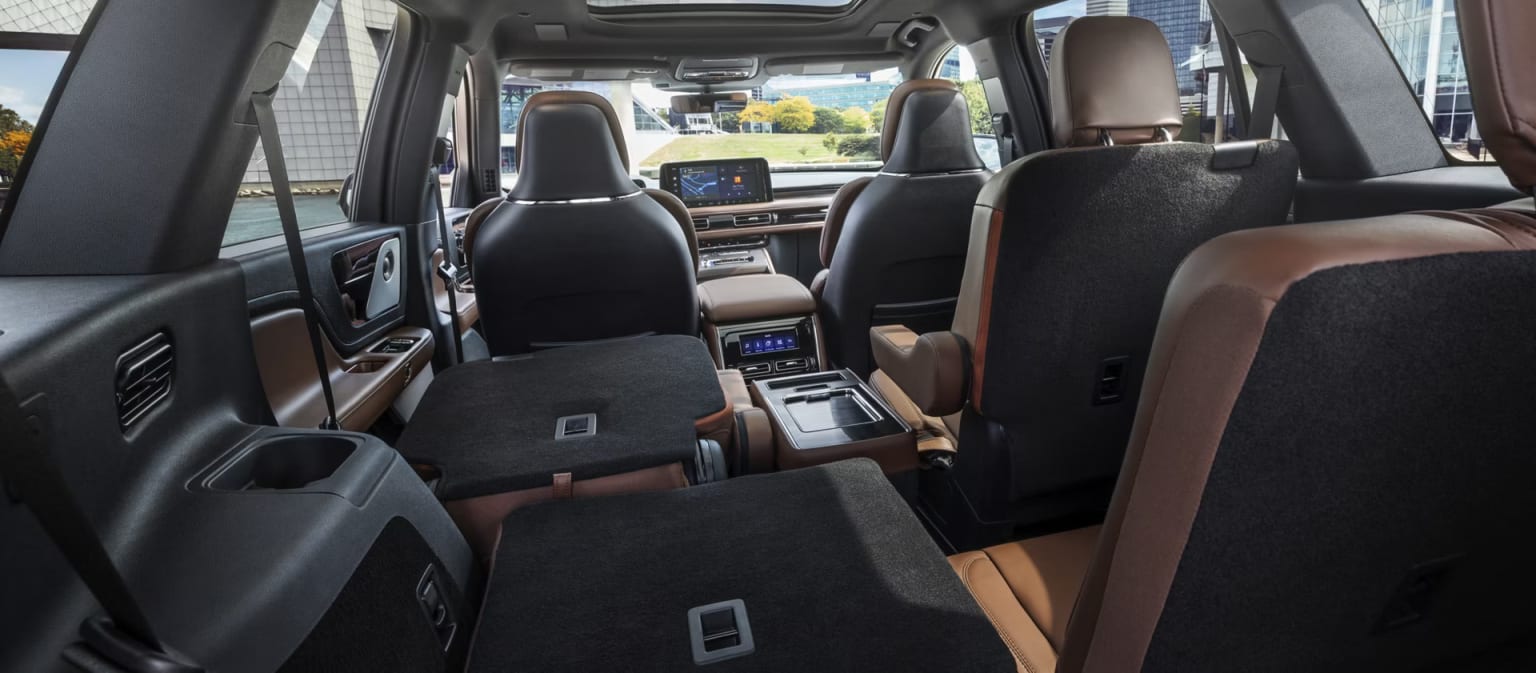
Lincoln Aviator Cargo Space & Key Capacities
Cargo Space & Key Capacities
Passenger Volume (Cu. Ft.) 140.6
Cargo Volume Behind First Row (Cu. Ft.) 75.9
Cargo Volume Behind Second Row (Cu. Ft.) 39.9
Cargo Volume Behind Third Row (Cu. Ft.) 16.5
Base Curb Weight (Lbs.) 4,745–4,862


This table gives a clear snapshot of how Lincoln Aviator Cargo Space supports both daily routines and bigger hauling needs without moving into full-size SUV territory. With 140.6 cubic feet of passenger volume, the Aviator balances interior comfort with usable storage, making it a strong option for families who want space without excess bulk.

The most telling numbers are the cargo volumes behind each row. With 16.5 cubic feet behind the third row, the Aviator easily handles everyday items like grocery bags, backpacks, or smaller strollers when all seats are in use. That’s the kind of space that works well for errands or school drop-offs around Savannah, where you’re often loading and unloading quickly.

Fold the third row and cargo capacity jumps to nearly 40 cubic feet, which is where Lincoln Aviator Trunk Space starts to feel genuinely versatile. This setup is ideal for weekend trips, pet crates, or larger shopping runs without crowding passengers. When maximum hauling is needed, folding the first row opens up almost 76 cubic feet, allowing room for bulky sports gear, travel luggage, or boxed items in one trip.

The curb weight range also hints at the Aviator’s balanced design. It’s substantial enough to feel planted on the road, yet still easy to live with day to day. For drivers in Bluffton or Beaufort comparing cargo space capabilities, this table shows how the Aviator adapts as needs change, offering flexibility that goes well beyond the raw numbers.

Real-World Cargo Examples: Lincoln Aviator
Real-World Cargo Examples
Everyday Items & Use Cases Behind Third Row Behind Second Row Behind First Row
Weekly Grocery Runs Everyday grocery bags & smaller essentials Larger grocery haul with bulk items Big shopping runs with larger boxes
Carry-On Travel Bags Carry-ons & backpacks Multiple carry-ons plus duffels Carry-ons, duffels, & bulky travel gear
Strollers Compact stroller Full-size stroller with extra bags Stroller plus large gear
Sports Gear Smaller sports bags Team bags, chairs, & coolers Multiple bulky sports items
Pet Travel Small pet items Pet crates Larger crate setups


This table does a great job of turning Lincoln Aviator Cargo Space into something you can actually visualize in everyday life. Instead of focusing only on measurements, it shows how the Aviator adapts as seats fold down and cargo needs grow. With 16.5 cubic feet behind the third row, the Aviator handles daily essentials like grocery bags, backpacks, or compact strollers without issue. That’s the kind of space that works well for errands or school drop-offs when all seats are in use.

As soon as the third row folds, the picture changes dramatically. Nearly 40 cubic feet behind the second row opens the door to larger grocery runs, full-size strollers, pet crates, or multiple carry-on bags for a weekend trip. This is where Lincoln Aviator Trunk Space starts to feel genuinely flexible, especially for families or active households that need room without stepping up to a larger SUV.

With the first row folded, cargo capacity expands to nearly 76 cubic feet, making the Aviator capable of hauling bulky sports gear, travel luggage, or larger boxed items in a single trip. For drivers in Savannah or Bluffton who balance daily driving with weekend travel or recreational plans, this versatility matters more than raw numbers alone.

How Lincoln Aviator Cargo Space Fits Real Life

Choosing the right luxury SUV often comes down to how well it fits your everyday routine, and this guide to Lincoln Aviator Cargo Space is designed to make that decision easier. By looking at cargo volume behind each row and translating those numbers into real-world use, it becomes clearer how the Aviator adapts as your needs change. From quick errands with all seats in place to larger hauling jobs with rows folded down, the Aviator offers flexibility without feeling oversized or cumbersome.

What stands out most is how balanced the layout feels. The third-row cargo area works well for daily essentials, while folding the rear seats opens up a much more versatile space for trips, hobbies, or family activities. That adaptability is what makes Lincoln Aviator Trunk Space appealing for drivers who want a premium SUV that can handle both routine driving and occasional heavier loads. Instead of forcing you to choose between comfort and utility, the Aviator blends the two in a way that’s easy to live with.

For drivers in Savannah or Bluffton, this kind of balance can matter just as much as the headline specs. Whether you’re comparing trims, planning future needs, or simply trying to understand how much room you’ll really have, the Aviator’s cargo layout supports a wide range of lifestyles. Taken together, the details in this article show why the Aviator remains a strong option for shoppers who want luxury, versatility, and practical cargo space working together in one refined package.

FAQ: Lincoln Aviator Cargo Space & Trunk Room


How much cargo space does the Lincoln Aviator have behind the third row?
The Lincoln Aviator provides 16.5 cu. ft. of cargo volume behind the third row. This space is best for everyday items like grocery bags, backpacks, and smaller gear when all rows are in use.
How much cargo room is available behind the second row?
Cargo volume behind the second row is 39.9 cu. ft. Folding the third row is a popular setup for daily driving because it gives you a larger, flatter space for strollers, pet crates, and weekend bags.
What is the maximum cargo capacity with the rear seats folded?
With cargo volume measured behind the first row, the Aviator provides 75.9 cu. ft. This is the configuration that supports bulkier loads when you need the most open cargo area.
How should I think about Lincoln Aviator Trunk Space for day-to-day errands?
If you regularly drive with all three rows available, the 16.5 cu. ft. area behind the third row is a convenient “quick-load” zone. If you want more flexibility without giving up front and second-row seating, keeping the third row folded opens up 39.9 cu. ft. behind the second row.
Does passenger space affect cargo usability in the Aviator?
The Aviator lists 140.6 cu. ft. of passenger volume, which supports comfortable seating while still leaving useful storage behind each row. In real life, that balance matters because you can carry passengers and cargo without feeling cramped.
Why does curb weight matter when comparing cargo-focused SUVs?
The Aviator’s base curb weight range is 4,745–4,862 lbs. A vehicle’s weight can influence road feel and how stable it feels when the cargo area is loaded for trips or busy weekends.
Is the Lincoln Aviator Cargo Space better for families who use all three rows?
If you frequently carry passengers in the third row, the 16.5 cu. ft. space behind it is best used for smaller bags and essentials. Many families fold the third row when they do not need it, because 39.9 cu. ft. behind the second row makes daily loading much easier.
Where can I compare the Lincoln Aviator cargo area in person?
You can compare Lincoln Aviator Cargo Space in person at J.C. Lewis Lincoln. Many shoppers from Savannah, Bluffton, and Hilton Head prefer seeing the liftgate area and seat-folding setup firsthand to make sure the cargo layout fits their daily routine.

Why Shop Your 2026 Lincoln Aviator With Us

At J.C. Lewis Lincoln, we know that shopping for a luxury SUV is about more than picking a badge. You’re choosing something that has to fit your everyday life, and Lincoln Aviator Cargo Space is a perfect example of where real-world needs matter. That’s why we don’t just point at a spec sheet and call it a day. We help you compare how the Aviator’s cargo room works with the way you actually drive, pack, and live.

When you visit our team, we can walk you through the Aviator’s cargo layout in person, show you how the seating folds, and help you visualize what fits behind each row. If you’re deciding whether the Aviator’s third-row cargo area is enough for your routine, or you want to see how much more room you gain with the third row folded, we make it easy to understand without the guesswork.

Drivers from Savannah and Beaufort appreciate our straightforward approach and our focus on matching the vehicle to the customer, not the other way around. From your first questions to your final decision, J.C. Lewis Lincoln is here to make the process clear, comfortable, and genuinely helpful.


How Else Can J.C. Lewis Lincoln Help?

DISCLAIMERS: *Vehicle specifications, measurements, cargo volume, passenger volume, and weight figures are based on manufacturer data and may vary by model, trim level, drivetrain, and vehicle configuration. *Cargo capacity and usable space are measured according to manufacturer standards. Actual usable space may vary based on seating position, seat adjustment, accessories, and the shape or size of cargo. *Features, specifications, and availability are subject to change without notice. Always confirm current details with the manufacturer or dealer. *Images, descriptions, and specifications are provided for informational purposes only and may not reflect current inventory or exact vehicle configuration.